Trauma Counselling
You don’t have to retell to heal
Trauma counselling supports you through a process that prioritizes safety, choice, and nervous system regulation. Healing happens when your body and mind finally feel safe enough to soften.

What If Healing Didn’t Require Reliving?
You may be carrying something heavy - memories, sensations, patterns, or a sense that you’re not quite yourself anymore.
Here’s what matters most:
You do not have to retell traumatic experiences in detail for healing to occur.
Trauma is not the event - it’s the imprint left on your nervous system. Healing is not about reliving the past. It’s about reclaiming your present.
Two people can experience the same event and have completely different responses. Trauma is shaped by:
Your nervous system
Your history
Your supports
Your context
Your responses are not weaknesses - they are adaptations.
Understanding Trauma: It’s the Response, Not the Event
Common Trauma Responses
-

Hypervigilance & Hyperarousal
Constant alertness, difficulty relaxing, sleep challenges, startle responses.
-

Emotional Responses
Anxiety, numbness, irritability, shame, emotional overwhelm.
-

Relationship Impacts
Difficulty trusting, fear of closeness, pushing away or clinging, boundary challenges.
-

Physical Symptoms
Chronic tension, headaches, digestive issues, fatigue, rapid heartbeat.
-

Cognitive Effects
Intrusive thoughts, nightmares, concentration challenges, negative beliefs, dissociation.
-

Avoidance
Avoiding reminders, staying busy, numbing, withdrawing.
-

Freeze & Shutdown
Feeling stuck, disconnected, unable to act or speak.
Who Trauma Counselling Supports
Childhood Trauma
Relational Trauma
Developmental Trauma
Single-Incident Trauma
Cultural & Systemic Trauma
PTSD
Complex PTSD (C‑PTSD)
All forms of trauma are valid. All deserve care
The Integrated Compass for Trauma Healing
-
Nervous System First
We build regulation skills, expand your window of tolerance, and help your body feel safe again.
-
Three-Brain Tango
We reconnect mind, heart, and body so they can work together rather than in conflict.
-
Trauma-Informed Foundation
Safety, choice, collaboration, empowerment, and pacing that honours your readiness.
-
Cultural & Systemic Trauma Awareness
Your trauma is understood in context — cultural identity, migration, racism, systemic barriers, and intergenerational patterns.
-
Strengths & Resilience
Your survival speaks to your strength. We build on what has carried you this far.
Therapeutic Approaches for Trauma Healing
Trauma healing is not one-size-fits-all. Your experiences, your nervous system, your cultural context, and your readiness shape the approach we take. Sessions draw from multiple evidence‑based and integrative modalities, always at a pace that feels safe and collaborative.
Below is an elevated, client‑friendly description of each modality — written in your voice and aligned with The Integrated Compass
Accelerated Resolution Therapy (ART)
A gentle, evidence‑based approach that helps the brain process distressing memories without requiring detailed retelling. ART uses eye movements to reduce emotional intensity while keeping the facts intact. Many people experience meaningful relief within 1–5 sessions for specific memories. You remain in full control throughout the process.
01
Nervous System Regulation
Trauma lives in the body. We use somatic tools to help your nervous system return to safety:
Grounding practices
Breathwork
Body‑based awareness
Techniques to widen your window of tolerance
These tools help you feel more present, more regulated, and more in control of your internal experience.
02
Narrative based healing
Trauma often shapes the stories we tell about ourselves — stories of blame, shame, or powerlessness. Narrative therapy helps you:
Separate yourself from the problem
Reclaim authorship of your story
Identify strengths that were always there
Reframe limiting beliefs shaped by trauma
You become the narrator again, not the narrative.
03
Metaphor & Symbolic Work
Sometimes trauma is hard to put into words. Metaphor allows you to express experiences safely and indirectly. We use imagery, symbolic language, and gentle metaphor to help your mind and body process what feels too overwhelming to name directly.
This approach is especially helpful for people who think visually, creatively, or intuitively
04
Emotionally Focused Therapy (EFT)
EFT helps you understand and transform emotional patterns — especially those shaped by attachment wounds. We explore:
What emotions are underneath your reactions
How your nervous system learned to protect you
How to respond to emotions with compassion instead of fear
EFT supports deeper emotional clarity, connection, and self‑understanding.
05
Neuro‑Linguistic Programming (NLP)
NLP helps shift the internal patterns that keep trauma responses active. Through gentle, structured techniques, we explore:
How your mind organizes memories
How language shapes emotional experience
How to create new internal pathways that support healing
This is not about “positive thinking.” It’s about rewiring patterns that no longer serve you.
06
Family Systems & Intergenerational Work
Trauma rarely exists in isolation. We explore:
Patterns passed down through generations
Roles you were assigned in your family system
How your nervous system adapted to survive
How to break cycles you don’t want to carry forward
This work honours your cultural, relational, and ancestral context.
07
Inner Child & Parts‑Informed Work
Trauma often leaves younger parts of us frozen in time. Inner child work helps you:
Meet those younger parts with compassion
Understand their fears, needs, and protective strategies
Integrate them into your adult self with safety and care
This is not regression - it’s reconnection.
08

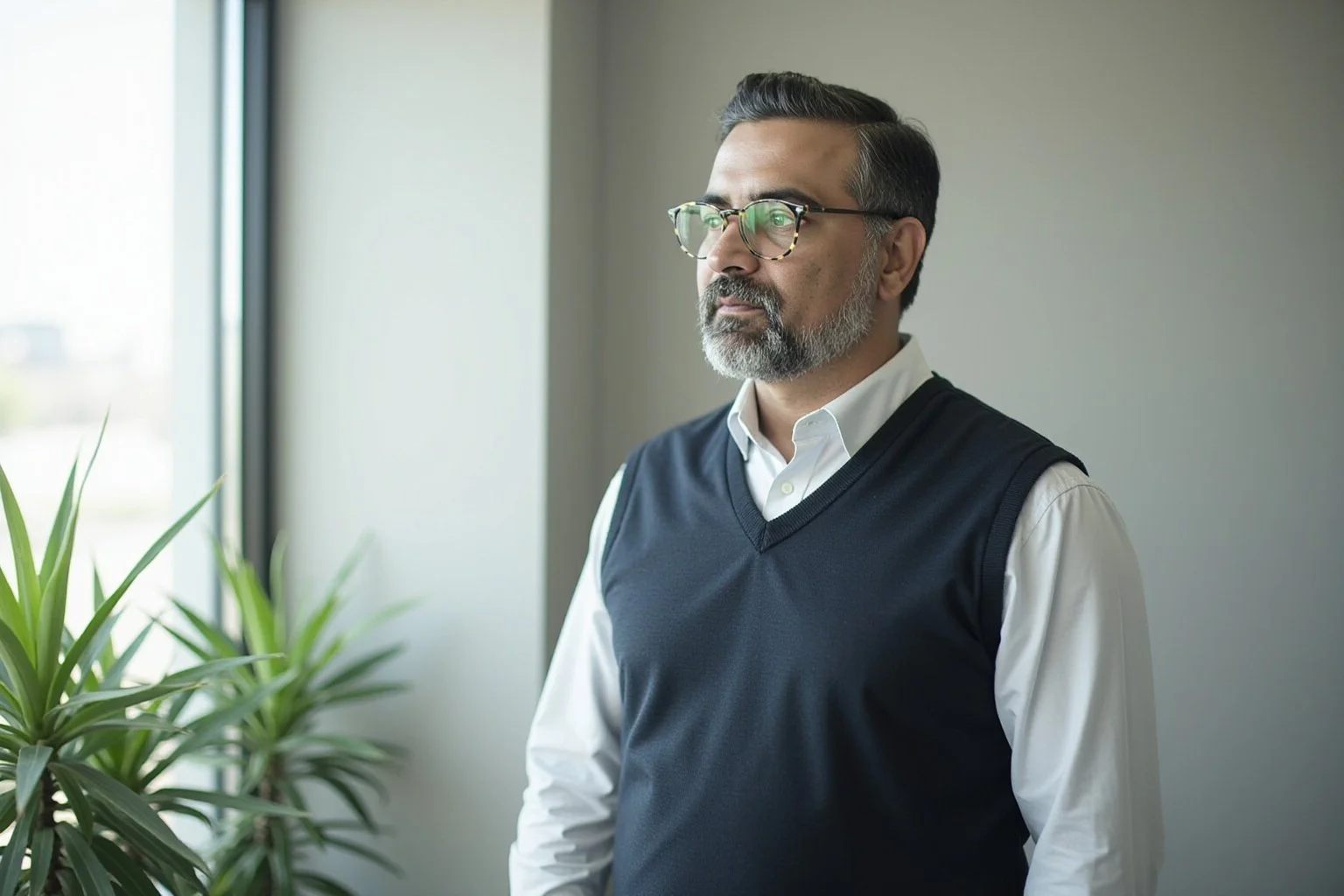
About Nimir
Nimir brings over 20 years of experience supporting families navigating complex dynamics, cultural transitions, and intergenerational patterns. His approach integrates family systems theory, trauma-informed practice, attachment-based work, and culturally grounded care.
With lived and professional experience serving Asian communities, LGBTQ2S+ families, and newcomer families, Nimir offers counselling in English, Gujarati, and Hindi to ensure every family member can express themselves fully.
"I start where you are. I honour the diversity of minds, experiences, and family structures. Every family carries wisdom - my role is to help you access it."
Ready to Begin Your Healing?
You don’t have to carry this alone. You don’t have to retell everything. You don’t have to be “ready” - you just have to take the first step.
A complimentary discovery call gives you space to ask questions, understand the process, and feel into whether this is the right fit for you.
You deserve safety. You deserve support. You deserve healing at your pace.